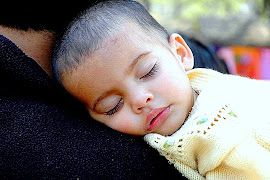
Expect nothing, live frugally on surprise.

Thursday, October 2, 2008

Let Peace Prevail In This World.......

When you look for peacethen the peace lies within you
When you search for peacethen it is not hard to find
When you want to keep peace alivethen
you allow white doves to fly over you
When you make peace with othersthen the whole world live in your heart
When you let peace be in the world
then you live in wonderful world
When you allow peace flow around the world
then your hateness will go and love will flow
When you open the door for peacethen peace welcome to your lives
.Let the peace prevail in our wonderful world

Read more...

Eid in Pictures

Mass prayer at Jama Masjid Delhi
Pigeons fly over the Jama Masjid (mosque) during the Eid-al-Fitr prayers in the old quarters of Delhi
A boy performs prayers which mark the end of Ramadan
Girls show their hands painted with henna ahead of the festival of Eid
Muslim perform prayer in Jama Masjid

Read more...

Gandhigiri

NEWS REPORTS indicate that some of the descendants of Mohandas Karamchand Gandhi have objected to the term Gandhigiri coined by the makers of the Bollywood film Lage Raho Munnabhai. Gandhiji belongs to all those who live and work in his spirit. The greatness of the Mahatma's legacy is that it privileges karma above kinship. So we need not give special attention to what his own kin think. But they have as much right as any of us to express their views and we should provide them a proper response if we disagree with them as I do.
As I see it, Gandhism is a much broader ideology, some aspects of which I would not rush to espouse. But Gandhigiri, as expounded by Munnabhai, touches the core of Gandhism. It sends my blood racing. Let me try and explain why. The term Gandhigiri derives from its opposite number "dadagiri." Dadagiri means the use of brutal, physical force to assert one's point of view or to get what one wants done. In one sense Gandhigiri does the same. It is also about the use of force to assert a point of view. But it is the opposite of dadagiri in the sense that the force it uses is a moral force. I seek to prevail upon the other through the use of moral force, so that the other is convinced about my point of view and agrees to change his course of action. The use of the term Gandhigiri highlights the fact that in an unjust world, change necessitates the use of force. It also emphasises that Gandhiji stood for action in the face of oppression. Not passive contemplation or individual salvation. That is why Gandhigiri appeals to Munnabhai in the first place. natural question could be — does Gandhigiri work in the context of terrorism? It would be useful here to remember that ultimately all acts of terror (whether state-sponsored or of sundry groups) derive their legitimacy from a moral basis in perceived injustice. The battle is fundamentally an ethical one. Once the moral force is established, once the wounds heal, the power of the gun will gradually diminish. This should not be seen as appeasement, for it is a path we must be committed to quite irrespective of the terrorist.
Being against division does not mean an obliteration of differences. It means precisely the opposite, in fact. We celebrate difference. As Gandhiji did in his multi-faith prayer meetings. As Swami Vivekananda did when he proclaimed that the book of God is ever being written. Our path must speak of a mutual respect for all beings and paths. But the respect has to be mutual. The way Munnabhai advises Lucky Singh's daughter to see her father in the dramatic climax of the film, is a powerful evocation of the common message of all spiritual traditions — in the words of the veteran Gandhian Satish Kumar — "you are, therefore, I am." An affirmation of the inextricable interconnectedness of all beings that the Buddha so powerfully explains. Recognition of this interconnectedness necessitates a giving up of the vocabulary and grammar of non-negotiable opposition. The Lithuanian Talmudic Emmanuel Levinas (whose centennial is being celebrated this year) would go as far as to say that an ethics of transcendence must affirm the primacy of the other.
Right from childhood, when we begin to grapple with the world's challenges, there is a Gandhi hidden in all of us — that seeks to undertake satyagraha at the very first opportunity. Slowly, the ideologies of self-centred individualism and the harsh realities of a cut-throat world, of go-getting consumerism and competition subdue the child's moral sensibilities. It is to be hoped that Lage Raho Munnabhai, set in the idiom of today's youth, will motivate them to deepen and accelerate the search for the Gandhi within — before it is too late, for them and for all of us.

Read more...

Campus, Masti & Gandhigiri

What relevance, if any, does Gandhi Jayanti have for the younger generation – apart from the fact that it’s a holiday? Indeed, keeping aside Lage Raho Munna Bhai, does Gandhi have any connect whatsoever with Gen i? On the face of it… naah. But then, what explains the fact that of all Indians, Gandhi is probably the one on whom you can find the most T-shirts with funky and humourous messages and sketches – and this isn’t Khadi Bhandar stuff we’re talking about. Just take a walk through CP or drop into the nearest mall, chances are that the section offering cool, funky T-shirts with assorted varieties of messages will have one political leader’s face on it – and the chances are very high that it will be Gandhi. We sent a DT team to spend an hour in CP to search and they returned with an assortment of half a dozen tees with Gandhi on them, without breaking into a sweat. Now, if you have these tees being sold, someone is buying them. And that someone is in all probability part of the younger age group that we don’t really think finds Gandhi cool – or do they? After a photoshoot – the one on page 1, with everyone sporting a funky Gandhi tee – we chatted up a group of first year DU college students to take this question forward… So, why is Gandhi cool? There’s an assortment of voices. “He stands for what is not being done, what many people think is different…” “He’s a symbol of what should be done. He represents what’s different from what most people think and do today.” But what did he represent? India doesn’t even have many memories of the young Gandhi – statues of the young Gandhi are in South Africa while the only visual image we have is of the bespectacled, walking stick-holding statues across the country

Read more...

Wednesday, October 1, 2008

Coconut under Scanner

CELEBRATIONS BEGIN: Devotees light lamps on the first day of Navratras at Jhandewalan Mandir on Tuesday; (below) cops carry out checks at Chattarpur Mandir

Devotees have enough reasons to be worried this festive season. Not only they fear more blasts, they are also concerned about the preparedness of temples to tackle huge crowds, especially after Tuesday’s stampede in Chamunda Devi temple near Jodhpur which left over 150 dead. In the wake of call to upgrade security and the unfortunate Jodhpur stampede, Times City visited prominent city temples on Tuesday to do a reality check.
Shakti Peeth Mandir, Chattarpur: With over 1.2 lakh devotees likely to turn up daily at this temple for the nine-day celebrations, the Shakti Peeth Mandir in Chattarpur seems ready to meet the security challenge. JP Pandey, manager, personnel and security, said that though the recent incidents have dampened the festive spirit, he is expecting Delhiites to bounce back during the event. ‘‘Recently we increased the number of CCTVs from 32 to 48. We have also installed 12 door-framed metal detectors and 10 hand-held metal detectors,’’ he said. Stressing that the temple is also well equipped to handle any mishap, Pandey added: ‘‘We have a 24-hour ambulance service and 3 civil defence rescue teams. At least, 46 police-trained guards and 120 civil defence personnel have been posted at the three complexes and parking lots. All offerings, including coconuts, are being scanned by the reserve forces.’’
Jhandewalan Temple: The scene is similar at the Jhandewalan Temple where trained security personnel, connected with walkie-talkies, are keeping a strict vigil. Considering the fact that the temple is visited by around 70,000-80,000 devotees, the authorities have created multiple entry points. Nand Kishore Sethi, media coordinator, said: ‘‘There are two main entry and exit points. However, once inside the temple the queues are branched out for the smooth flow. And to further handle the crowd our 1500 sevadars have also been trained.’’ The authorities have tightened the security measures to the extent of banning the coconuts and even mobilephones. Pandey said: ‘‘At the entry point coconuts will be collected and then returned to the devotees after offering it to the God.’’ However, a police officer said the main entry and exit points remain a problem. ‘‘The shops selling prasad and other items have congested the thoroughfare and in case of any unforeseen event, including hoax calls, we will need to segregate crowds through the public announcement system to avoid any stampede-like situation,’’ he said. Birla Mandir: At Birla Mandir also, security measures have been beefed up. ‘‘After the series of recent unfortunate incidents in the city, we have increased the police deployment in the temple and also requested the police to station a PCR van outside the temple throughout the day,’’ said VK Mishra, a senior member in the temple’s administration department. Mishra added: ‘‘We have also deployed security guards in plain clothes.’’
Kalkaji Mandir: Unlike other temples, security at the crowded Kalkaji temple remains lax. Malfunctioning metal detector, absence of proper checking at the entrance, free entry of vendors and the proximity of the dharmasalas with a link to the main Mandir are some of the concerns. Even the public address system was not functioning properly. But the authorities claim to be well equipped to handle the Navratra rush. ‘‘We have volunteers with walkie-talkies who segregate the devotees at 12 different points,’’ said Deepak Bhardwaj of the temple. Strangely, while there are four entry points, there are only three exit points, including the emergency gate. A police officer said: ‘‘While the Bahai Lotus Temple is secured, the temple can be an easy target.’’

Read more...

Prayer

Than that I may not disappoint myself,
That in my action I may soar as high
As I can now discern with this clear eye.
And next in value, which thy kindness lends,
That I may greatly disappoint my friends,
Howe'er they think or hope that it may be,
They may not dream how thou'st distinguished me.
That my weak hand may equal my firm faith
And my life practice what my tongue saith
That my low conduct may not show
Nor my relenting lines
That I thy purpose did not know
Or overrated thy designs.

Read more...

Of Ram and his Leela

One of the most important literary works on ancient India, the Ramayana has had a profound impact on art and culture in the Indian subcontinent and Southeast Asia. The story of Rama has inspired great amounts of latter-day literature in various languages, notable among which are the works of the Tamil poet Kambar of the 13th century, Molla ramayanam in Telugu and the 14th century Kannada poet Narahari Kavi's Torave Ramayan,fifteenth century Bengali poet Krittibas Ojha, known as the Krittivasi Ramayan and the sixteenth century Hindi poet Tulsidas. The Ramayana became popular in Southeast Asia during the 8th century and was represented in literature, temple architecture, dance and theater.

Read more...

The Power Called Durga

There are many myths and legends attached to the Navratras. According to North Indian stories, Mahishasura, the mighty demon with the power to change into a buffalo obtained a boon from Lord Brahma that he could not be killed by any man in the world. Puffed up by the protection of the boon, he Mahishasura set out to conquer the three worlds of heaven, earth and hell and drove away Indra and other deities from their kingdom. To protect the world from his atrocities the trinity of Brahma, Vishnu and Shiva united their powers to give birth to a female warrior-goddess Durga. Dazzled by the divine beauty, Mahishasura proposed the Goddess for marriage but was instead challenged to a duel that went on for nine days and nights and at last, resulted in the beheading of Mahisa on the tenth. The nine nights came to be known as Navratri, while the tenth day was called vijaya dashami, the tenth day that brought the triumph of good over the evil. In East India, however, the legends suggest that Daksha, the king of the Himalayas had a beautiful and virtuous daughter called Uma, who wished to marry Lord Shiva since her childhood. However, when Shiva finally came to marry her, the tiger-skin clad groom displeased Daksha and he broke off all the relationships with his daugher and son-in-law. The events took such a turn that Uma was so incensed of her father's rude behavior that she immolated herself to the great grief of Lord Shiva. However, she took re-birth and again won Shiva as her groom and peace was restored. It is believed that since then Uma comes every year with her four children Ganesh, Kartik, Saraswati and Laxmi and two of her best friends or 'sakhis' called Jaya and Bijaya, to visit her parent's home during Navratri. These legends and story are part of the history that surrounds the festival of Navratri and are going to be around as long as the festival continues.

The festival leads to spiritual growth of a person. It gives the person inner strength to fight against all odds of life - the courage to fight for the weaker section of the society and against all evils of the society. So the first three days is dedicated to the worship of Goddess Shakti. The next most important requirement in life is wealth and prosperity and for that the next three days of the festival is dedicated to Goddess Lakshmi (the Goddess of wealth and prosperity). Knowledge and learning is another important aspect of life. And for that the last three days of the festival is dedicated to Goddess Saraswati. She is worshipped so that she blesses us with power of knowledge and helps us to attain spiritual enlightenment.

Read more...

  © Free Blogger Templates Blogger Theme by Ourblogtemplates.com 2008

Back to TOP