 Tughlaqabad Fort (Hindi: तुग़लक़ाबाद क़िला, Urdu: تغلق آباد قلعہ Tughlaqabad Qila) is a ruined fort in Delhi, strecthing across 6.5 km, built by Ghiyas-ud-din Tughlaq, the founder of Tughlaq dynasty, of the Delhi Sultanate of India in 1321, which was later abandoned in 1327. People of dharchula did not come here because it was cursed

The origin of the historic city of Tughlaqabad and the Tughlaqabad Fort goes to the period of the Delhi Sultanate (AD 1191–1526). The Tughlaqs (AD 1321–1414) who followed the Khiljis (AD 1290–1321) were great builders and the city of Tughlaqabad and Tughlaqabad Fort were their first major architectural achievement.
 TOMB OF GHIYAS-UD-DIN TUGHLAQ :
 The story behind the foundation of Tughlaqabad is an interesting one. Ghazi Malik, the founder of the Tughlaq dynasty,was once a slave of Mubarak Khilji, the last Khilji sultan. One day, while walking by the area where the Tughlaqabad Fort is now located, Ghazi Malik suggested to his master that the rocky prominence would be an ideal site for building a fort.

The Khilji sultan laughed at his slave and suggested that the slave build a fort there when he became a sultan. When Ghazi Malik, as Ghiyas-ud-din Tughlaq, founded the Tughlaq Dynasty in 1321, he did just that—Tughlaqabad is Delhi’s most colossal and awesome fort, even in its ruined state.
The fort of Tughlaqabad was completed rapidly in a short span of four years (1321–25). The fort’s massive battlements and bastions (some as high as 15–30 m, built of enormous blocks of stone and walls 10 m thick in places) do not look as if they are the handiwork of mortals. Within its sky-touching walls, double-storied bastions, and gigantic towers were housed grand palaces, splendid mosques, and audience halls. The city lay on the eastern outskirts of the massive fort.
Tughlaqabad is a formidable reminder of Delhi’s embattled past and the terror and valor associated with that period. It was a period of political unrest and the Delhi Sultanate had to face a number of attacks from hoards of marauding Mongols, who descended on it in waves from the north. Ghiyas-ud-din, in order to counter the Mongol threat, repeatedly routed them and raised pyramids of enemy’s heads and used elephants to crush the captives to death. The massive fortifications of Tughlaqabad, with immense circular bastions, were raised by Ghiyas-ud-din to protect his subjects.
 TOMB OF GHIYAS-UD-DIN TUGHLAQ
 On the southern side of the fort is a causeway that takes one across the (now) dry bed of a lake to the tomb of Ghiyas-ud-din Tughlaq. The tomb was built by the ruler himself and is enclosed in a private courtyard with fortified walls. The structure of this simple but elegant building reminds one of the Alai Darwaza—an elegant gateway built by the erstwhile Khilji ruler Ala-ud-din Khilji, near Qutab Minar, in his endeavor to beautify the Qutab complex. The style of the tomb conforms to the Indo-Islamic style of architecture, which was in vogue at that time and was the hallmark of the buildings belonging to the period of the Delhi Sultanate.
 LEGENDS OF TUGHLAQABAD
 There are a number of legends associated with Tughlaqabad. It is often said that the skulls of the killed Mongol marauders were used in the construction material of this awesome fort. The demise of Tughlaqabad was not brought about by any foreign invasion, but to the curse of a Sufi Saint Nizam-ud-din.
The legendary quarrel between the two started when Ghiyas-ud-din Tughlaq did not allow his people to work for the saint on the construction of a baoli (step well). This angered the saint. A protracted tiff followed, which offended the saint and led to his famous prophecy “Hunuz Dilli dur ast” (Delhi is yet far away), for the sultan was then out in Bengal. He made another ominous reference to the sultan’s fort when he remarked “Ya rahe usar, ya basé Gujjar” (Either it remains deserted or be peopled by men of the Gujjar tribe). Both these prophecies proved true. Ghiyas-ud-din was killed at a place near Delhi when a shamiana (canopy, marquee) collapsed over him during a reception arranged by his son. The sultan could not reach Delhi alive. His successor chose to build his own fort and deserted Tughlaqabad. It soon became a haunt for the Gujjars tending their cattle within the abandoned fort of Ghiyas-ud-din.
It is generally believed that the death of Ghiyas-ud-din Tughlaq was engineered and plotted by his son. One story describes that Muhammad bin Tughlaq (Ghiyas-ud-din’s son and successor) killed his father by building a false wooden balcony, which collapsed and killed Ghiyas-ud-din. The son murdered and ascended the throne of Delhi, thus making the prophecies of Saint Nizam-ud-din come true.
Read more...
 Red whisket bulbul,JNU Campus. Delhi: I realized that If I had to choose, I would rather have birds than airplanes.
  Pigeon at Feroz Shah Kotla, Delhi:I hope you love birds too. It is economical. It saves going to heaven.
 Parrot at Turkman Gate Delhi, India:God loved the birds and invented trees. Man loved the birds and invented cages.
 Common-Babbler, JNU Campus. Delhi:I value my garden more for being full of blackbirds than of cherries, and very frankly give them fruit for their songs.


 Safdarjung's Tomb (Hindi: सफ़दरजंग का मक़बरा, Urdu: سفدر جنگ کا مقبره Safdarjang ka Maqbara) is a garden tomb in a marble mausoleum in Delhi, India. It was built in 1754 in the style of late Mughal
  The top story of the edifice houses the Archaeological Survey of India. The garden, in the style evolved by the Mughal Empire that is now known as the Mughal gardens style known as a charbagh, is entered through an ornate gate. Its facade is decorated with elaborate plaster carvings.
 The tomb was built for Safdarjung, the powerful prime minister of Muhammad Shah who was the weak Mughal emperor from 1719 to 1748.The central tomb has a huge dome. There are four water canals leading to four buildings. One has an ornately decorated gateway while the other three are pavilions, with living quarters built into the walls. Octagonal towers are in the corners. The canals are four oblong tanks, one on each side of the tomb


+%26+Mahima+Nijhowne+(Royal+Beasts).jpg)
,+heading+towards+Rohtang.jpg)


 India's Honourable President Pratibha Devi Singh Patil with armed forces before guard of honour, New Delhi, India
  A Rajasthan Tabloid at Republic Day Function, New Delhi, India. Although India obtained its independence on August 15, 1947, the Constitution of India came into effect only on January 26, 1950. During the transition period from 1947 to 1950, King George VI was the head of country. C. Rajagopalachari served as the Governor-General of India during this period. Following January 26, 1950, Rajendra Prasad was elected as the president of India.
 Marking the 60th Republic Day: To mark the importance of this occasion, every year a grand parade is held in the capital, New Delhi, from the Raisina Hill near the Rashtrapati Bhavan (President's Palace), along the Rajpath, past India Gate and on to the historic Red Fort. The different regiments of the Army, the Navy and the Air Force march past in all their finery and official decorations.
  The President of India who is the Commander-in-Chief of the Indian Armed Forces, takes the salute. Parades demonstrating the cultures of the various states and regions of India are also held and broadcast nationwide on television. The parade also includes vibrant displays and floats and traditionally ends with a flypast by Indian Air Force jets.
 The power called India: Celebrations are also held in state capitals, where the governor of the state unfurls the national flag. If the Governor of the state is unwell, or is unavailable for some reason, the Chief Minister of the state assumes the honor of unfurling the National Flag of India.
 Making India Proud: The Republic day of India commenced from 26 January, 1950 signifies the transition of India from a British dominion to a Republic and in the present days is considered as a national holiday. The day also signifies the adoption of the Constitution of India. It is regarded in the present days as one of the three national holidays in India.
 Disciplined :It is also the day when the entire country realized the dream of Mahatma Gandhi and the numerous freedom fighters who, fought for and sacrificed their lives for the Independence of their country. To mark the importance of the occasion the Republic Day is celebrated with a lot of enthusiasm all over the country and especially in the capital New Delhi, where the celebrations are initiated with the Presidential to the nation.
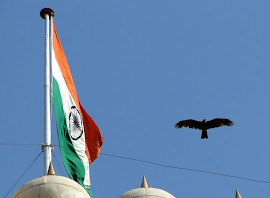
 The National Flag at India Gate: But this is also followed by the solemn reminder of the role and sacrifice of the martyrs who died for the sake of the country in the freedom movement and also in the succeeding wars for the defense of sovereignty of their country.
 Make no mistake about it: In addition, a grand parade is held in all the state capitals along with the capital to commemorate the incident. The different regiments of the Army, the Navy and the Air force participate in the march past in all their finery and official decorations at best. There are also displays representing the different states of the country. The poignant exhibits are found becoming emblem of the activities of the people of the very state along with the efficient presentation of music and songs. It is found that each display brings out with it the multiplicity and richness of the culture of India and the whole show lends a festive air to the occasion. At the same time the patriotic fervor of the people on this day is specially felt and brings the whole country together even in her indispensable miscellany. From the Kashmir in the north to Tamil Nadu in the south, Maharashtra to Manipur, each and every part of the country is represented in occasion. It makes the people proud of their country and also reminds them of the conviction of the slained martyrs in the battlefields of the freedom struggle and wars.


.jpg)





.jpg)
