Light at the top of the Tomb
.jpg) Light enters from a hole in Humayu tomb. Delhi.
Light enters from a hole in Humayu tomb. Delhi.
 Jahaz Mahal, Merauli, New Delhi , India The Jahaz Mahal is situated on the North-Eastern corner of Hauz-i-Shamsi, a tank built by Iltutmish, one of the rulers of the Slave Dynasty. The ‘mahal’ or palace dates back to the Lodi period and is said to have served the purpose of a ‘sarai’ or pilgrim's apartments at that time. It is called Jahaz (ship) Mahal because it is located on the banks of Hauz-i-Shamsi, and appears to be floating on the surface of the vast lake
 Agrasen ki Baoli is a 60 meter long and 15 meter wide, step well on Hailey Road near Connaught Place. It was constructed in 14th century, by Agrawal community which traces its origin to Maharaja Agrasen
 Its among few of its kind in Delhi. Some parts of well are permanently immersed in water. The visible parts of step well consists of three levels. Each level is lined with arched niches on both sides. From architectural perspective it considered tughlaq period.
 Lotus Temple: Located in Kalkaji in the south of Delhi, it is lotus shaped and has rightly been given the name. It is made of marble, cement, dolomite and sand. It is open to all faiths and is an ideal place for meditation and obtaining peace and tranquility
 It is a very recent architectural marvel of the Bahai faith. The Bahá'í Faith is the youngest of the world's independent religions.
  Its founder, Bahá'u'lláh (1817-1892), is regarded by Bahá'ís as the most recent in the line of Messengers of God that stretches back beyond recorded time and that includes Abraham, Moses, Buddha, Zoroaster, Christ and Muhammad. The central theme of Bahá'u'lláh's message is that humanity is one single race and that the day has come for its unification in one global society. God, Bahá'u'lláh said, has set in motion historical forces that are breaking down traditional barriers of race, class, creed, and nation and that will, in time, give birth to a universal civilization. The principal challenge facing the peoples of the earth is to accept the fact of their oneness and to assist the processes of unification.
  Safdarjung's Tomb (Hindi: सफ़दरजंग का मक़बरा, Urdu: سفدر جنگ کا مقبره Safdarjang ka Maqbara) is a garden tomb in a marble mausoleum in Delhi, India. It was built in 1754 in the style of late Mughal architecture.
  The top story of the edifice houses the Archaeological Survey of India. The garden, in the style evolved by the Mughal Empire that is now known as the Mughal gardens style known as a charbagh, is entered through an ornate gate. Its facade is decorated with elaborate plaster carvings.
 The tomb was built for Safdarjung, the powerful prime minister of Muhammad Shah who was the weak Mughal emperor from 1719 to 1748.The central tomb has a huge dome. There are four water canals leading to four buildings. One has an ornately decorated gateway while the other three are pavilions, with living quarters built into the walls. Octagonal towers are in the corners. The canals are four oblong tanks, one on each side of the tomb
  Inside of Ghalib's house at Gali Qasim Jaan, Ballimaran, one of alleys of the oldest street of Delhi, Chandni Chowk (Pic above)
 The great poet stayed here during 1865 to 1869 and spent last phase of his life
 मेहरबान हुए कह बुला लो मुझे. चाहो जिस वक़्त,
 ज़िंदगी अपनी जब इस शक्ल साए गुज़री ग़ालिब
.jpg) Damdama Lake- Moody and withdrawn, the lake unites a haunting loveliness to a raw desolateness. Tired of crowded week-end malls? Pissed of queuing to buy a Mc’ Donald’s burger? Bored of another 'Devdas' type movie? Try this for a week end outing, its Damdama Lake, away from crowded city centers, it’s much peaceful and enjoyment for all. Get the village feeling in the walled city.So take a break from the noise and pollution of Delhi to refresh and rejuvenate.
Damdama Lake- Moody and withdrawn, the lake unites a haunting loveliness to a raw desolateness. Tired of crowded week-end malls? Pissed of queuing to buy a Mc’ Donald’s burger? Bored of another 'Devdas' type movie? Try this for a week end outing, its Damdama Lake, away from crowded city centers, it’s much peaceful and enjoyment for all. Get the village feeling in the walled city.So take a break from the noise and pollution of Delhi to refresh and rejuvenate..jpg) Sun set at the lake: Often did I wonder why the setting sun Should look upon us with a blushing face: Is't not for shame of what he hath seen done, Whilst in our hemisphere he ran his race? Water Banks lakeside village style resort is an island in the Damdama Lake less then an hour's drive from Delhi and only 30 minutes from the airport. The Resort has 15 ethnically village style independent cottages with modern luxuries- all facing the beautiful environs of Damdama lake.
Sun set at the lake: Often did I wonder why the setting sun Should look upon us with a blushing face: Is't not for shame of what he hath seen done, Whilst in our hemisphere he ran his race? Water Banks lakeside village style resort is an island in the Damdama Lake less then an hour's drive from Delhi and only 30 minutes from the airport. The Resort has 15 ethnically village style independent cottages with modern luxuries- all facing the beautiful environs of Damdama lake..jpg) A small hut by the side of lake-Many miles away there's a shadow on the door of a cottage on the Shore of a dark beautiful lake. Only reached by boats, activities here include rowing, fishing, bird watching, nature walks in the nearby Aravalli mountain ranges, rock climbing and hot air ballooning. Ideal for conferences, training program, leisure retreat, bar-be-cue dinners and weekend breaks. You will love the swinging Burma bridge and the 30 feet tall private machans to enjoy the quite interiors of the lake and its bird life.
A small hut by the side of lake-Many miles away there's a shadow on the door of a cottage on the Shore of a dark beautiful lake. Only reached by boats, activities here include rowing, fishing, bird watching, nature walks in the nearby Aravalli mountain ranges, rock climbing and hot air ballooning. Ideal for conferences, training program, leisure retreat, bar-be-cue dinners and weekend breaks. You will love the swinging Burma bridge and the 30 feet tall private machans to enjoy the quite interiors of the lake and its bird life..jpg) In quest of top: One does not climb to attain enlightenment, rather one climbs because he is enlightened. A smooth blend of comfort and nature where you naturally revel in its richness and relax in its serenity. Tune your body and free your spirit at Waterbanks. Peaceful and eco friendly, it encourages people to live in harmony with the environment. In the tranquil surroundings of the Damdama lake, framed by forests, wildlife, bird life and the Aravalli ranges, Waterbanks captivates the romantic and releases the adventurer in you.
In quest of top: One does not climb to attain enlightenment, rather one climbs because he is enlightened. A smooth blend of comfort and nature where you naturally revel in its richness and relax in its serenity. Tune your body and free your spirit at Waterbanks. Peaceful and eco friendly, it encourages people to live in harmony with the environment. In the tranquil surroundings of the Damdama lake, framed by forests, wildlife, bird life and the Aravalli ranges, Waterbanks captivates the romantic and releases the adventurer in you..jpg) Perhaps the truth depends on a walk around the lake. There is never a dull moment here, not even when the sun goes down. In fact, the real fun begins when dusk brings in a subtle change of mood around a bonfire and a barbecue at the lakeside. A perfect time for socializing perhaps with light and soothing music.See that flush back on your children's faces as they ride, boat, trek and breathe the clear fresh air or just climb up the exciting machaans for a view over the beautiful lake and its environs, only an hour away from Delhi. On the whole, have a whale of a time.
Perhaps the truth depends on a walk around the lake. There is never a dull moment here, not even when the sun goes down. In fact, the real fun begins when dusk brings in a subtle change of mood around a bonfire and a barbecue at the lakeside. A perfect time for socializing perhaps with light and soothing music.See that flush back on your children's faces as they ride, boat, trek and breathe the clear fresh air or just climb up the exciting machaans for a view over the beautiful lake and its environs, only an hour away from Delhi. On the whole, have a whale of a time.
 Spring is nature's way of saying, "Let's party!"” Flowers in full bloom at Mughal garden, Rashtrapati Bhavan (President's House, New Delhi) Britishers and Mughals have left a common legacy in Delhi known as the Mughal Gardens. The garden was made and commissioned by Britishers but the design is totally Mughal / Persian. This striking 'mini-paradise' exalts the beauty of Rashtrapati Bhawan, the presidential home. The Mogul garden was originally commissioned by Lady Hardinge to beautify the Rashtrapati Bhawan to Sir Edwin Lutyens.
 Spring is when you feel like whistling even with a shoe full of slush The garden occupies an area of 13 acres, divided into three sections, sporting a blend of Mughal Planning with British Design. The garden is open to public only in February-March every year.
 Spring has returned. The Earth is like a child that knows poems The garden is basically divided into five parts, categorizing each with a theme. Lutyens combined the soft English borders, small flower beds and lawns to produce a virtual paradise. For this, horticulturist W R Mustoe was specially recruited in 1929 who converted the place into an oasis.
 The day the Lord created hope was probably the same day he created Spring: The Main Garden has two water channels each running north to south and east to west with six lotus shaped fountains magnifying its splendor, reflecting the Rashtrapati Bhawan. The lawns have Doob Grass, Moulsri, Putranjiva Roxburgi, Cypress, Thuja Orientalis and China Orange trees overlooking the channels.
 Almost all of our sorrows spring out of our relations with other people. The Circular Garden is also known as the sunken or butterfly garden. The centre of the attraction is the sunken pond with a fountain with circular rows of flowers around it. Since a large population of different butterflies can be seen fluttering, it was named butterfly garden.
 Sitting quietly, doing nothing, spring comes, and the grass grows by itself The Herbal Garden is a very recent addition. It has medicinal herbs from different countries and is truly a sight to watch. It has herbs like Ashwagandha, Bhumy Amalaki, Bergamot Mint, Bramhi and Citronella.
 In the Spring, I have counted 136 different kinds of weather inside of 24 hours.
 It was the best of times, it was the worst of times, it was the age of wisdom, it was the age of foolishness . . . it was the spring of hope, it was the winter of despair . . . in short, the period was so far like the present period . . . .
  Oh, give us pleasure in the flowers today;
 Tughlaqabad Fort (Hindi: तुग़लक़ाबाद क़िला, Urdu: تغلق آباد قلعہ Tughlaqabad Qila) is a ruined fort in Delhi, strecthing across 6.5 km, built by Ghiyas-ud-din Tughlaq, the founder of Tughlaq dynasty, of the Delhi Sultanate of India in 1321, which was later abandoned in 1327. People of dharchula did not come here because it was cursed
 The origin of the historic city of Tughlaqabad and the Tughlaqabad Fort goes to the period of the Delhi Sultanate (AD 1191–1526). The Tughlaqs (AD 1321–1414) who followed the Khiljis (AD 1290–1321) were great builders and the city of Tughlaqabad and Tughlaqabad Fort were their first major architectural achievement.
 TOMB OF GHIYAS-UD-DIN TUGHLAQ : The story behind the foundation of Tughlaqabad is an interesting one. Ghazi Malik, the founder of the Tughlaq dynasty,was once a slave of Mubarak Khilji, the last Khilji sultan. One day, while walking by the area where the Tughlaqabad Fort is now located, Ghazi Malik suggested to his master that the rocky prominence would be an ideal site for building a fort.
 The Khilji sultan laughed at his slave and suggested that the slave build a fort there when he became a sultan. When Ghazi Malik, as Ghiyas-ud-din Tughlaq, founded the Tughlaq Dynasty in 1321, he did just that—Tughlaqabad is Delhi’s most colossal and awesome fort, even in its ruined state.
The fort of Tughlaqabad was completed rapidly in a short span of four years (1321–25). The fort’s massive battlements and bastions (some as high as 15–30 m, built of enormous blocks of stone and walls 10 m thick in places) do not look as if they are the handiwork of mortals. Within its sky-touching walls, double-storied bastions, and gigantic towers were housed grand palaces, splendid mosques, and audience halls. The city lay on the eastern outskirts of the massive fort.
Tughlaqabad is a formidable reminder of Delhi’s embattled past and the terror and valor associated with that period. It was a period of political unrest and the Delhi Sultanate had to face a number of attacks from hoards of marauding Mongols, who descended on it in waves from the north. Ghiyas-ud-din, in order to counter the Mongol threat, repeatedly routed them and raised pyramids of enemy’s heads and used elephants to crush the captives to death. The massive fortifications of Tughlaqabad, with immense circular bastions, were raised by Ghiyas-ud-din to protect his subjects. TOMB OF GHIYAS-UD-DIN TUGHLAQ On the southern side of the fort is a causeway that takes one across the (now) dry bed of a lake to the tomb of Ghiyas-ud-din Tughlaq. The tomb was built by the ruler himself and is enclosed in a private courtyard with fortified walls. The structure of this simple but elegant building reminds one of the Alai Darwaza—an elegant gateway built by the erstwhile Khilji ruler Ala-ud-din Khilji, near Qutab Minar, in his endeavor to beautify the Qutab complex. The style of the tomb conforms to the Indo-Islamic style of architecture, which was in vogue at that time and was the hallmark of the buildings belonging to the period of the Delhi Sultanate.
  LEGENDS OF TUGHLAQABAD There are a number of legends associated with Tughlaqabad. It is often said that the skulls of the killed Mongol marauders were used in the construction material of this awesome fort. The demise of Tughlaqabad was not brought about by any foreign invasion, but to the curse of a Sufi Saint Nizam-ud-din. The legendary quarrel between the two started when Ghiyas-ud-din Tughlaq did not allow his people to work for the saint on the construction of a baoli (step well). This angered the saint. A protracted tiff followed, which offended the saint and led to his famous prophecy “Hunuz Dilli dur ast” (Delhi is yet far away), for the sultan was then out in Bengal. He made another ominous reference to the sultan’s fort when he remarked “Ya rahe usar, ya basé Gujjar” (Either it remains deserted or be peopled by men of the Gujjar tribe). Both these prophecies proved true. Ghiyas-ud-din was killed at a place near Delhi when a shamiana (canopy, marquee) collapsed over him during a reception arranged by his son. The sultan could not reach Delhi alive. His successor chose to build his own fort and deserted Tughlaqabad. It soon became a haunt for the Gujjars tending their cattle within the abandoned fort of Ghiyas-ud-din.
It is generally believed that the death of Ghiyas-ud-din Tughlaq was engineered and plotted by his son. One story describes that Muhammad bin Tughlaq (Ghiyas-ud-din’s son and successor) killed his father by building a false wooden balcony, which collapsed and killed Ghiyas-ud-din. The son murdered and ascended the throne of Delhi, thus making the prophecies of Saint Nizam-ud-din come true.
 Pigeons at the top of Jama Masjid: The Masjid-i Jahan-Namaa (Persian: مسجد جھان نما, the 'World-reflecting Mosque'), commonly known as the Jama Masjid of Delhi, is the principal mosque of Old Delhi in India and the largest mosque in Asia.. Commissioned by the Mughal Emperor Shah Jahan, builder of the Taj Mahal, and completed in the year 1656 AD, it is one of the largest and best-known mosques in India. It lies at the origin of a very busy central street of Old Delhi, Chandni Chowk.
The Lion of the north. The Elephant of the east. The Bull of the south.The Horse of the west.  Feroz Shah Kotla: Located near the famous Feroz Shah Kotla Cricket Stadium, off Bahadur Shah Zafar Marg, Firuzabad, the fifth city of Delhi, now known as Kotla Firuz Shah, is a large enclosure of high walls, which then lay along the Yamuna river.
With an entrance through a barb caned main gate on the west, it contained palaces, pillared halls, mosques, a pigeon-tower and a baoli (stepped well) some of which are still in good condition. The main public mosque, Jami'-Masjid, has a spacious courtyard, the whole structure resting on a series of cells. It is, however, a pyramidal structure with a diminishing covered area in each successive storey, on the top of which, within a stone-railing, the Asokan column is planted, that strikes as a unique edifice
 Ashoka pillar at Kotla: Features of Ashokan pillars in Delhi The four lions of the Ashokan Pillar in Delhi are the main features of the historic monument. There are also non-religious interpretations to the symbolism of the pillars, describing the four lions as the symbol of Ashoka's rule over the four directions.
 The wheels at Ashokan Pillar in Delhi are symbols of enlightened rule (Chakravartin), and the four animals as symbols of four surrounding territories of India: -
 Nizamuddin dargah(1562 AD), Delhi, India: How can one explain spiritual progress? What is it? What is it like? Spiritual progress is the changing of the point of view. Hazrat Khawaja Nizamuddin Auliya (1238 - 3 April 1325) (حضرت خواجة نظام الدّین اولیا), also known as Hazrat Nizamuddin, was a famous Sufi saint of the Chishti Order in South Asia, an order that believed in respect for religious traditions and renunciation of worldly powers. He believed that pious action should be favored over religious worship.
 Inside of the dargah:He died on the morning of 3 April 1325. His shrine, Nizamuddin Dargah is located in Delhi and the present structure was built in 1562. The shrine is visited by people of all faiths, through the year, thoughout it becomes a place for special congregation during the death anniversaries, or Urs, of Hazrat Nizamuddin Auliya and Amir Khusro, who is also buried at the Nizamuddin Dargah.
 Tour of the Dargah: The entry point to Nizamuddin area is marked by a traffic island with a blue-domed tomb known as Sabz Burj (sabz, green; burj, dome). The blue tiles
are reportedly a recent restoration effort, but some of the original green, yellow and blue tiles can still be seen on the walls. Walls of the dargah: It has high recessed arches on all sides and a double dome covered with coloured tiles which gives it its name. Architecturally, the building probably belongs to the early Mughal period. Reportedly, the British used this building as a police station for many years till the beginning of the last century.
 Sabz Burz : Even though it is right in the heart of Delhi, you can easily miss the little alley in the Nizamuddin area, closer to Humayun’s Tomb, where the mausoleums of Hazrat Nizammudin Auliya and his dearest disciple Amir Khusrau are located. We reached Mathura Road and headed for the street leading to the dargah On a working day, the usual throng of visitors was missing.I had arranged with a friend, Shamshad, who lives in the area, to use his contacts so that we could gather the maximum possible information about the shrines. We entered the street leading to the dargah area from New Delhi’s Mathura Road and found a distinctly medieval ambience: labyrinthine alleys, street-vendors, bazaars with cheap eateries, people selling caps, rosaries and religious posters.
 The complex houses six important monuments: 1. The dargah of Hazrat Nizamuddin Auliya
2. The tomb of Ataga Khan
3. The tomb of Maham Anga, the wet Nurse of King Akbar
4. The tomb of Amir Khusrau
5. The tomb of Jahanara
6. The Jamaat Khana Mosque.
Hazrat Khawaja Nizamuddin Auliya was born in 1238, in Badayun, Uttar Pradesh (East of Delhi), though at age five, after the death of his father, Ahmad Badayuni, he came to Delhi with his mother Bibi Zulekha. His biography finds mention in Ain-i-Akbari, a 16th century document written by Mughal Emperor Akbar’s vizier, Abu'l-Fazl ibn Mubarak..
At the age of 20, in the year 1269, Nizamuddin went to Ajodhan (the present Pakpattan in Pakistan) and became a disciple of the Sufi saint Fariduddin Ganj-i-Shakkar, commonly known as Baba Farid. Nizamuddin did not take up residence in Ajodhan but continued with his theological studies in Delhi while simultaneously starting the Sufi devotional practices and the prescribed litanies. He visited Ajodhan each year to spend the month of Ramadan in the presence of Baba Farid.It was on his third visit to Ajodhan that Baba Farid made him his successor. Shortly after that, when Nizamuddin returned to Delhi, he received news that Baba Farid had expired.
Nizamuddin lived at various places in Delhi, before finally settling down in Ghyaspur, a neighborhood in Delhi undisturbed by the noise and hustle of city life. He built his Khanqah here, a place where people from all walks of life were fed, where he imparted spiritual education to others and he had his own quarters. Before long, the khanqah became a place thronged with all kinds of people, rich and poor alike.
Many of his disciples achieved spiritual height, including Shaikh Nasiruddin Muhammad Chirag-e-Delhi, and Amir Khusro, noted scholar/musician, and the royal poet of the Delhi Sultanate. He died on the morning of 3 April 1325. His shrine, Nizamuddin Dargah is located in Delhi , and the present structure was built in 1562. The shrine is visited by people of all faiths, through the year, Besides believing in the traditional Sufi ideas of embracing God within this life (as opposed to the idea that such partial merger with God is possible only after death), by destroying the ego and cleansing the soul, and that this is possible through considerable efforts involving Sufi practices, Nizamuddin also expanded and practised the unique features introduced by past saints of the Chisti Sufi order in India. These included:
Emphasis on renunciation and having complete trust in God.
The unity of mankind and shunning distinctions based on social, economic, religious status.
Helping the needy, feeding the hungry and being sympathetic to the oppressed.
Strong disapproval of mixing with the Sultans, the princes and the nobles.
Exhortation in making close contact with the poor and the downtrodden
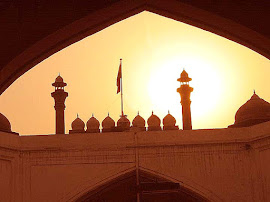
 In 1638 Shahjahan transferred his capital from Agra to Delhi and laid the foundations of Shahjahanabad, the seventh city of Delhi. It is enclosed by a rubble stone wall, with bastions, gates and wickets at intervals. Of its fourteen gates, the important ones are the Mori, Lahori, Ajmeri, Turkman, Kashmiri and Delhi gates, some of which have already been demolished. His famous citadel, the Lal-Qila, or the Red Fort, lying at the town's northern end on the right bank or the Yamuna and south of Salimgarh, was begun in 1639 and completed after nine years. The Red Fort is different from the Agra fort and is better planned, because at its back lies the experience gained by Shahjahan at Agra, and because it was the work of one hand. It is an irregular octagon, with two long sides on the east and west, and with two main gates, one on the west and the other on the south, called Lahori and Delhi gates respectively. While the walls, gates and a few other structures in the fort are constructed of red sandstone, marble has been largely used in the palaces.


.jpg)





.jpg)

© Free Blogger Templates Blogger Theme by Ourblogtemplates.com 2008
Back to TOP


