Expect nothing, live frugally on surprise.

Wednesday, December 24, 2008

Random pics

This monkey was enjoying his afternoon tea when i clicked this picture

Just Like Mankind, this tree is also lifeless. I clicked this picture with my mobile phone from a Roadside garden where this tree was standing tall, making its lonely presence felt. Still it is looking graceful
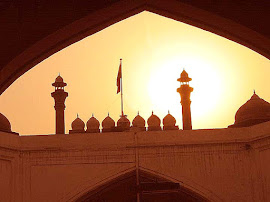
This was taken by me from the roof top of my building ..i had gone just like that to take a litle walk and then i saw the sun..it was lukin magnificient ...and i though i need to capture this moment in my camera..i ran downstairs and got my camera..this is one of my favorite shots..this mite not be the best frame but i simply love the colour of the sun..it is so real that it is almost unreal...
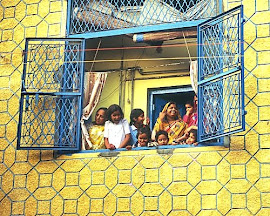
An underprivileged kid watches a good school's program atop boundary wall by making his view through the curtains. This caught my attention as the view looked dramatic to me but the look in the eyes of the boy were asking a hundred question... why there is a social gap in form of the rigid boundary and on top of that the effluent society does not event want the poor kids to see that. Questions like will I ever be able to get there to be in such schools.Though India is fast progressing in terms of economic strength and education level, still there are a few sectors which have not crossed the boundary wall still.
This is a section of the dome in the prayer hall of the Qila-i-Kuhna mosque, located in the grounds of the Purana Qila, Delhi. It was built in 1541 by Sultan Fariduddin Sher Shah - emperor of India from 1540 - 1545. The mosque features five carved niches or mihrabs in its western wall, and beautiful calligraphy. Marble in shades of red, white and slate was used in its construction. There was a second storey where female members of the court could pray.

Read more...

Class Conflict, Religion Fueling Jehadis in Pakistan

Class conflict and religion are in equal measure fuelling the jehadi movement in Pakistan, and the sooner the government moves against this the better, editorials in three leading English dailies said Saturday."The resentment the powerless feel may be cloaked in anti-Americanism or religiosity but in actual fact it boils down to a class conflict," Dawn said in an editorial headlined "The common enemy". "Becoming part of a militant or terrorist organization empowers poor, impressionable young men. And it's not just the weapons or the monthly stipend that give them comfort - finally they have an identity when previously they were faceless, they become part of a community in which they are respected," the newspaper added. Noting that the "uniform" of militant Islam "confers instant respectability in some quarters", Dawn said that the sole terrorist captured in Mumbai, Ajmal Kasab of Faridkot, "apparently first sought refuge from poverty in crime and then gravitated towards jehadi outfits As long as nothing is done to address the growing underemployment in this country, the militants will find no shortage of fresh recruits," the editorial maintained.

Terrorists who India says came from Pakistan sneaked into Mumbai Nov 26 night and attacked several targets in India's financial capital. The mayhem ended Nov 29, killing over 170 people including foreigners.

Holding that the Mumbai violence had diverted attention in Pakistan from the internal threat to an external "enemy", Dawn said: "This must not be allowed to happen.

"Soul-searching is in order, and an acceptance of the fact that Pakistan is indeed a hub of militancy and terrorism," the editorial added.

Dawn also urged President Asif Ali Zardari and Prime Minister Yusuf Raza Gilani to "inform the nation in unequivocal terms that what is past is past and that extremism, which has taken root in this country, will enjoy no sanction and will not be tolerated".

Lamenting that it was "sad, on one level", that it had taken external pressure "to stir the government into acting against those who are besmirching our name in the world", Dawn said: "We face isolation, and internal ruin, if the common enemy is not brought to book."

The Pakistani government Thursday sealed the offices of the Jamaat-ud-Dawa (JuD), a front for the banned Lashkar-e-Taiba (LeT) militant group, after the UN declared it a terrorist organization.

New Delhi has blamed the LeT for the Mumbai terror attacks and the 2001 attack on the Indian parliament.

According to The News, JuD and the LeT were "known to have scouted Punjab for suitable people to join their ranks. Summer schools were also organized for children, with 'religious' education imparted to them reportedly incorporating fiery 'pro-jehad' messages".

In this context, it pointed to Kasab's father telling "a sad, but familiar tale, of an angry young man walking out of the house and falling straight into the hands of a religious organization". Thus, "if there is a true commitment to doing away with forces like the JuD, and if our desire to do so stems from within ourselves rather than from the US, the UN or India, much more needs to be done. "We need to expose the true nature of these forces before people; to reveal how they have lured vulnerable young teenagers away from homes and families only to turn them into killers; how they have exploited religion to further their own interests," The News contended.

"It is only when its roots are pulled out that an organization like the JuD can be stopped. Otherwise, like a weed, it will continue to spread rapidly," the editorial added.

Read more...

From White House to Kenya: Granny Obama Knows Best

She is arguably the most famous grandmother in the world today after her grandson, Barack Obama, has become US President-elect. But Sarah Hussein Obama, 86, has so far succeeded to navigate her new-found status by remaining true to herself.
In her simple abode in K'Ogelo village located within the environs of Lake Victoria - the world's second largest fresh water lake - in Western Kenya, Mama Sarah, as she is lovingly referred to by the never-ending stream of visitors to her home, talks philosophically but firmly about what she refers to as God's Will. "My grandson won because it was God's will... because God would have it no other way. But certainly, Barack gave his all and his immediate family, particularly his wife Michelle, kept him grounded, with their eyes never wavering from the prize. In the end, their combined effort paid off handsomely. "What I did was to unceasingly pray that victory would be his. Now that he is going to be the President of the most powerful nation on earth, I have began praying and fasting again, pleading to God to bestow on him the wisdom and courage needed to steer the ship of statecraft with a steady hand."

The matriarch of the local Obama clan says there is good reason to believe that her future is going to brighten: the Kenya Government quickly spruced up the area around her house - a forgotten frontier with limited infrastructure - when it became clear that Barack was headed for victory. "We now have electricity in K'Ogelo and the roads have since been macadamised but what is surprising is that my home is under police protection while my children, including my grandchildren, are receiving police protection. I suppose this is all because Barack is a son of this homestead."

The Kenyan Minister for Tourism, Najib Balala, has, in fact, directed that Mama Sarah's home be declared a national monument, arguing that the world wants to know where the father of the President of the United States was born. Incidentally, the tourism industry earns Kenya's second highest foreign exchange.

Among the stream of visitors at the now famous house in K'Ogelo village was none other than Kenyan Prime Minister, Raila Odinga, who has confirmed the widely-held belief here that he is a close cousin of the US President-elect.

It is felt that the Obama clan had had a premonition about Barack Obama's prospects a long time ago. On a visit to Kenya in 2006 in the capacity of a US Congress Senator, Obama visited his granny and members of his extended family at K'Ogelo. It was at that meeting that the family had handed him a memorandum, behind closed doors.

Hilda Atieno Were, a cousin privy to the contents of the memorandum, discloses that Barack was requested to assist in handling family responsibility. "Basically, we wanted him to consider providing communal help to the family, such as linking the many orphans in the family to education scholarship found in the U.S," says Were.

The Obamas hail from Luo, the country's fifth biggest community, known to practise widow inheritance, wherein a brother inherits his deceased brothers widow. However, the practice is believed to have increased the number of HIV/AIDS infections as widow inheritance is perpetuated even if the deceased had succumbed to the deadly virus. As per official figures, HIV/AIDS kills 700 people every day in Kenya, leaving in its wake a tribe of orphans. Western Kenya is the hardest hit in the country by the HIV/AIDS epidemic.

While Were looks forward "to seeing him [Barack] pushing the agenda of African nations", she does not expect to benefit as an individual.

If anybody in the Obama family qualifies to talk candidly about Barack, it is his step-sister, Dr Auma Obama, with whom Barack had stayed in the late 1980s, while he was on a trip to trace his ancestral background.

Dr Obama, who now spends most of her time in the UK where she lectures at a premier university, says, "Barack is a very outgoing individual, smart, disciplined and focused. He is inherently a statesman. As his sister I can vouch for him ... Barack will do whatever it takes to mend the fractured image of the US in the eyes of the international community. He will avoid any form of unilateralism and as his short span in the U.S Congress has shown he will win American foes to his side using the force of argument and leading by example, from the front." Understandably, Dr Obama does not expect the US President-elect to jump at every emergency call he receives from his extended family, including from herself. "His mandate is from the American public not the extended Obama family. Barack's core business will be to win the hearts and minds of the US citizenry over and over again by delivering on his many promises. As a family we do not want to be a drag on him, if anything, we understand as a family, the responsibilities that come with high office, particularly in a country, where public office holders are expected to have impeccable integrity in the eyes of the public. So it would be foolhardy and selfish of us as a family to expect Barack to bend rules or to involve himself in any form of favouritism, so as to assist us."

The US President-elects late father was one of the beneficiaries of airlifts to the U.S. in the 1960s that targeted gifted Kenyans. He arrived in Honolulu, Hawaii, in his mid-20s, when he was already married with children back home. He met the Caucasian Ann Soetoro on the island, married her in a civil service and in 1961 sired the now famous son.

A year later Obama senior left Hawaii - never to go back to his young family - to pursue further studies at the prestigious Harvard University. He returned to Kenya in the late 1960's to take up a top job in the Ministry of Economics, headed by the current President of Kenya, Mwai Kibaki. It was in Kenya that Obama senior died in 1982 in a car crash. His estranged wife, who had since remarried, succumbed to cancer in 1995. A student of Berkley Graduate School of Journalism, U.S., Edwin Okong'o, a Luo, suffers no illusions that Barack is a Kenyan. Like Were, he does not expect to benefit personally from the Obama connection.

"What Obama offers us as Kenyans, is something to brag about. In our culture, a child belongs to the father. Even though he acknowledges that he [Barack] does not know his father very well, our traditions are bound to weigh those of Americans and, therefore, he is indisputably a son of Kenya...For my bragging rights and pride, I may agree that Obama is Kenyan, but economically, Obama has no relevance in my life."

Read more...

Sexual Harassment at the Workplace

In 1997, the Supreme Court (SC) took upon itself the task of framing the Vishaka Guidelines. The idea was to evolve an alternative mechanism to fulfill the urgent social need to protect working women from sexual harassment. These guidelines were declared as the law of the land and were binding and enforceable until suitable legislation was enacted. But although over a decade has passed since then, the legislation is yet to be put in place. Statistics show that one woman is molested every 26 minutes and this refers to the reported cases only. If the unreported cases were to be included, it would be a matter of seconds rather than minutes. Most cases are not reported by victims because of reasons ranging from family and police pressures to the unreasonably long process of gaining justice. The population of working women in India has grown multifold over the last decade. According to statistics, 60 per cent of women acknowledge that sexual harassment at the work place is rampant and has been accepted as a professional hazard by most women. Yet, the awareness and implementation of the Vishaka Guidelines remains poor. This was also recognised by the SC in a Public Interest Litigation (PIL) filed in the case of Medha Kotwal (2006). The apex court went on to make State Governments, through the Labour Commissioners and Women and Child Departments, responsible for ensuring that all workplaces with 50 per cent and more women on their staff, set up a Complaints Committee (CC). In reality, however, either the CCs don't exist as an ex-ante mechanism or are set up in an ad-hoc manner. The increasing number of complaints filed in the courts, in the National Commission for Women (NCW) and the State Women's Commissions (SWC), are a testimony to the lack of the proper implementation of the Vishaka Guidelines by the employer and the general ineffectiveness of the CCs.

A RTI application filed with the Labour Commissioner in Maharashtra in 2007 revealed that no concrete measures had been taken by it despite the SC order in the Medha Kotwal case. Another application filed under the Right to Information (RTI) with the Maharashtra State Women Commission revealed that 60 complaints of sexual harassment at the workplace were filed in four months between January 1, 2008 and April 30, 2008.

Most developed nations have recognised sexual harassment at the workplace as a serious abuse, resulting from the exertion of power on the victim by the perpetrator. Therefore sexual harassment, in addition to being a violation of the right to safe working conditions, is also a violation of a person's right to bodily integrity.

As the Protection of Women against Sexual Harassment at Workplace Bill, 2007, is being deliberated and discussed, what is it that women have in terms of relief when employers fail to implement Vishaka Guidelines? This is a difficult question to answer. Yet, in the midst of all the chaos and confusion, the Courts have helped women secure justice, their rights and their dignity.

Take a few landmark judgements that have emerged recently: The Apparel Export Promotion Council v/s A.K. Chopra: AIR 1999 SC 625. This case is the first one where the SC applied the law as laid down under the Vishaka Guidelines. In this case, the SC recognised an important fact. It ruled that 'an attempt to molest' is equally an infringement of a woman's right to dignity at the workplace as a 'successful attempt of molestation'. The SC also recognised that in such cases, evidence and witnesses may not always be forthcoming. Hence, reliance has to be placed on the circumstantial evidence and whether it, in overall terms, inspires the confidence of the judges.

Then there is the Civil Writ Petition No. 8826 of 2004, which came up in the Bombay High Court in a case involving Tata Mettaliks Limited. Here, a lady supervisor was subject to sexual harassment at the hands of the Deputy GM at the plant. The lady sought an inquiry and the Management, with the help of an advocate, conducted an inquiry. The perpetrator was exonerated on the basis of this and the services of the woman concerned was terminated. She challenged her termination in a complaint under the Maharashtra Recognition of Trade Unions and Prevention of Unfair Labour Practices Act, 1971, which decided in her favour and declared that the employer was guilty of unfair labour practices and granted reinstatement with consequential benefits. However, the Management failed to comply with the order of reinstatement by the order of the Labour Court. The matter was filed in the Bombay High Court which observed that Vishaka Guidelines are a law under Article 141 of the Constitution and that the powers to deal with the complaint of sexual harassment of an employee and inquiry vests with the CC and it cannot be decided by the Management.

The Delhi High Court order in a judgement involving S.K. Mallick, Director of National Academy of Audit and Account (NAAA), is another case in point: Mallick filed a petition before the Delhi High Court after the Central Administrative Tribunal (CAT) refused to stay the departmental proceedings of allegations of sexual harassment against him by a senior woman colleague. Mallick had allegedly entered the room of the woman officer at Shimla in an inebriated condition and misbehaved with her. The woman filed an FIR the next day and also intimated senior officials of Mallick's conduct. This led to a departmental inquiry. Mallick was suspended on the basis of a criminal case pending against him. He then approached the CAT seeking to stay the departmental inquiry. When the CAT refused to stay the departmental proceedings, Mallick approached the Delhi High Court.

The Delhi High Court while dismissing the petition made the following observations in respect of certain key definitions: (I) "Workplace" - The HC noted that in the case of the private sector, it is common for senior officials to run their businesses from their residences with the advancements in information technology. Accordingly, a person can interact or do business with other persons, while located in some other country by means of video conferencing, even while an officer or teacher may work from the accommodation allotted to her or him. Therefore, if an officer indulges in an act of sexual harassment with the employee, it would not be open for him to claim that the act had not been committed at the workplace but at his residence and get away with that argument. (II) "Any woman" - This expression is broad enough to include women of all ages, including women who may be senior in years and status. The HC said this in response to a plea by the accused that that he could not be accused of sexually harassing a senior officer towards whom he was not in position to extend any sort of favor.The above judgments set important precedents by extending the meaning of workplace, by defining who the affected women are, by delineating the nature of sexual harassment and the role of internal CCs. As the Draft Bill on Protection of Women against Sexual Harassment comes under national scrutiny, these judgments could help provide some much required clarity.

Read more...

Sir, Why are All Terrorists Muslims?

"Sir, why is it that all terrorists are Muslims?" Prajvi Bagga Malhotra, a Class 11 student of Modern School, asked me this question during a discussion about current events. This was a very timely, bold but sensible question and being a Muslim, I was accountable to address the curiosity in the minds of a class of 52 students. Prajvi isn't the only one to have alluded to the Western media coined statement that all terrorists are Muslims but all Muslims are not terrorists. With so many voices stating that the religion advocates violence, Islam is today under the scanner. Not all of them can be wrong - people judge by what they see and today these terrorists speak and act violently in the name of Islam. told Prajvi that the guiding themes of every religion are the same. Islam too has the same theme and ideology as other religions but a few people misled some of its followers in the name of god.

26/11 (Mumbai), Kafeel in Glasgow, Mumbai blasts by the Memons and others in India, the jehadis in Kashmir, 9/11, 7/7 (London), 13/12 (Delhi), 29/10 (Delhi) and the Al Qaeda at a global level - all these make my head go down in shame.

It's so embarrassing that each time a Muslim name is found attached with the inhuman and insane acts of terrorism.

Note that jehad is the most misunderstood and misconstrued concept by our non-Muslim brethren and even Muslims. The true concept of jehad in Islam is not to be against other communities, groups or religions but to be against one's own selfish nature, vices and shortcomings within Muslim society in order to fight evil, injustice, inequity, illiteracy and ignorance. First an individual fights jehad against himself to get cleansed. After that he continues the efforts with his wife, family, locality and the whole community. This is Jehad-e-Akbar, the right meaning of jehad.

Terrorism is a political process and religion or a religious community has nothing to do with it. Neither does any religion teach to kill innocents (that is what the terrorists do) nor are the terrorists the people chosen by that religious community to undertake such ghastly acts on their behalf.

Nevertheless, an average Muslim's fears are hate crimes, difficulty in finding jobs, admissions and residential accommodation, unwanted repercussions, distrust and other such things that always get exacerbated by such incidents. Muslims also fear a backlash like the 1984 Sikh riots against them. Terrorists should not be helped in creating a rift between communities.

The Mumbai attackers did try to create a cleavage between Hindus and Muslims. However, though a tragic incident, it did have a silver lining in that it cut across religious lines and saw people uniting in their horror and outrage.

But leaders of some parties have even begun to think that any criticism of Pakistan would not be relished by this country's Muslims.

I still remember that during the last general elections in India, to appease Muslims the Bharatiya Janata Party (BJP) boasted of the Lahore bus and improving relations with Pakistan as one of its major achievements. It's so sad that these people still treat Indian Muslims as Pakistan's stooges.

Though all Indians know that a few terrorists do not tarnish a whole community, the government for fear of losing votes will not take the matter up with the Pakistani government seriously and will just resort to rhetoric.It is quite clear now that Indian politicians of all shades were somehow living under an illusion that if they were to turn harsh against acts of terror, they would alienate the Muslims of this country.

When will they ever realize that by doing so they are clearly reflecting their perverted psyche of labeling all Indian Muslims as pro-Pakistanis, which is the worst abuse for any Indian Muslim.Going soft on terror will not make Muslims happy as the perpetrators of such acts do not segregate their targets by religion. If the politicians of this country think that by shying away from taking on terrorists directly and by going soft on terror they will get kudos from Muslims, they are sadly mistaken. The public in general has now had enough of those who exploit religious sentiment in order to gain electoral and political mileage. The recent poll results in Delhi are an indication of that.

The rider is: let us save Islam from "the Muslims", Hinduism from "the Hindus", Christianity from "the Christians", Judaism from "the Jews" and Sikhism from "the Sikhs" and other zealots as religion is a very personal matter and as humans, we are all same.

Read more...

Tuesday, December 23, 2008

Of Un-fulfilled Desires

Ala ud din Khilji started building the Alai Minar, which was conceived to be two times higher than Qutub Minar. The construction was abandoned, however, after the completion of the 24.5 meter high first storey; soon after death of Ala-ud-din. The first story of the Alai Minar still stands today.

Ala-ud-din conceived a very ambitious construction programme when he decided to build the second tower of victory when he returned in triumph from his Deccan campaign. However, the Sultan died before even the first storey was finished and the project was abondoned. Ala-ud-Din, felt compelled to increase even further the size of the Quwwatu'l Islam mosque. His scheme called for increasing the size of the enclosure four times, providing ceremonial entrance gateways on each side, and a great minar, twice the size of the Qutub.
This is the unfinished base of the mammoth tower begun by Alauddin Khilji intended to give competition to Qutub Minar. With an arched entrance and spearhead of fringes, identified as lotus buds by scholars, the Alai Minar is a gigantic rubble structure. A short distance west of the enclosure, in Mehrauli village, is the Tomb of Adham Khan who, according to legend drove the beautiful Hindu singer Rupmati to suicide following the capture of Mandu in Madhya Pradesh. When Akbar became displeased with him he ended up being heaved off a terrace in the Agra Fort. There are some summer palaces in the area and the tombs of the last Mughal kings of Delhi. An empty space between two of the tombs was intended for the last king of Delhi, who died in exile in Rangoon, Burma, in 1862, following his implication in the 1857 Indian Mutiny.

And The Desire which came true: Qutb Minar is the tallest brick minaret in the world, and an important example of Indo-Islamic Architecture. The Qutb Minar is 72.5 metres (239 ft) high. The diameter of the base is 14.3 metres wide while the top floor measures 2.7 metres in diameter. It is listed as a UNESCO World Heritage Site along with surrounding buildings and monuments.

Read more...

Christmas: Religion no bar

Christmas calls for celebrations in real terms. Here are a few non-Christians from North Delhi who are attending Midnight Masses and decking up the Christmas tree. If you thought Christmas is celebrated by only one community, then think again. There are numerous non-Christian families also who celebrate this popular festival with the same level of zeal and excitement. Midnight Masses on the eve of Christmas is what most of the North Delhiites get tempted to attend. The entire dramatization of the birth of Lord Christ is what fascinates people. Churches are usually crowded with lots of people queuing up to get inside and see the proceedings. "It’s really great to see so many candles lit up by the people; it’s just like the way people light so many diyas on Diwali. The best part of this Mass is that before the readings people sing jingles and hymns with candles in their hands. It’s just an amazing scene," says Deepti Bakolia with a twinkle in her eyes. Deepti gets her brother, Siddharth along to attend Special Mass on this eve. "Well, after all, a cuppa coffee and piece of Christmas cake are what I look forward to having as that’s really yummy," exclaims Siddharth.Though many might not be able to make it to the Midnight Mass in the church, they still celebrate it with a lot of vigour. Small little parties are organised at home on this day with families getting an opportunity to spend some time together. For Nupur Makhija, a financial analyst, from Shakti Nagar, it is more of a day for her to dress in red and white and have loads of fun with her friends and family members. Though she has attended the midnight service previously, now, due to her busy schedule, she is not able to make it to the church anymore. "Till the time I was in college, I used to have parties at my place and even decorate a Christmas tree. We still celebrate Christmas, with all of us involved in some or other activities. While my mother prepares special cake on this day, I take up the decoration part," says Nupur. Anup Thomas from Sector-13 Rohini finds it real fun to take his non-Christian friends along in the Church near Pitampura. "Now, for the last three years, my friends are coming regularly with me on 25," explains Anup.So, it’s not just the cookies, cakes and the jingling bells that have remained the centre of attraction for the non-Christian families of North Delhi; rather people have entered the premises of the church. They enjoy watching the birth of Jesus Christ and join their fellow Christians in the hymns.

Read more...

Santa Claus is coming

Meet the new-age Santa Claus brigade from West Delhi, who are here with some out-of-the-box goodies for West Delhiites
For us Christmas is the perfect time to make merry and hum jingles. But for Santa Claus, it’s the busiest time of the year. If we go by tradition then Santa makes a list of children throughout the world, categorizing them according to their behaviour and then delivers presents to them on Christmas Eve. WDP talks to some young Santa Claus in West Delhi to know what they are planning to gift West Delhiites this year. Free shopping coupons for all Gloria Saldanha from Janakpuri has already packed her bag with bundles of shopping coupons. “As Santa I will give discount coupons to all the West Delhiites. With these special coupons, they can shop with cool discounts not just in West Delhi markets but in any part of the world. This can be the best gift for West Delhiites who love shopping more than anything else,” says an excited Gloria.

I’ll gift flying cars to solve traffic messPraneet Singh has a fantastic idea to decongest roads in West Delhi. “Everyday, we waste so much time by just standing in the serpentine queues of vehicles on the city roads. As a Santa, I would exchange all the existing cars for new hi-tech models of cars that can fly so that there will be no problem of traffic jams on West Delhi roads. We can park these cars on the terrace of our homes and from there straightway head towards our office, colleges or for shopping,” shares Praneet. Magic broom for West Delhiites Another young Santa, Ankur Gautam thinks the best gift for West Delhiites would be a magic broom, which will make the city squeaky clean. “All the garbage would disappear and roads, lanes and footpaths would be unimaginably clean. That magic broom would also be helpful for the civic agencies responsible for cleaning the city as MCD workers hardly prefer to work with their ordinary broom,” says Ankur.No more office rush in the morning Tanya Singh believes that the level of stress and tension is increasing day by day in everyone’s life. As a Santa, her priority would be to give all West Delhiites some peace of mind. “No more early morning office or classes, as I will change the timings for everything. Office and schools will start at 12’o clock and will continue till four in the evening. Then it will be mandatory for everyone to go to a sports club, restaurant or park for recreation. No one will be allowed to go home directly. Free ice-creams and chocolates would also be provided to everyone before leaving office or school,” quips this young Santa.4 - A special ChristmasBhangra carolsAlways ready to shake a leg, West Delhiites just need an excuse to enjoy and Christmas is just the perfect time to create that rocking fusionThe perfect cuisineFrom Plum cake to chicken tandoori, the menu is just perfect. And, with restaurants coming out with special festive offers, it’s time to relish in a typical West Delhi styleSanta on a SUVWaiting for Santa to come in West Delhi? Of course he will come. Just keep your eyes open on West Delhi roads and you might spot a Santa Claus on a speeding SUVFestive ShoppingWith all the major markets already decked up, Christmas shopping is whole lot of fun here. And, don’t forget to bargain for a nice discount.

Read more...

  © Free Blogger Templates Blogger Theme by Ourblogtemplates.com 2008

Back to TOP